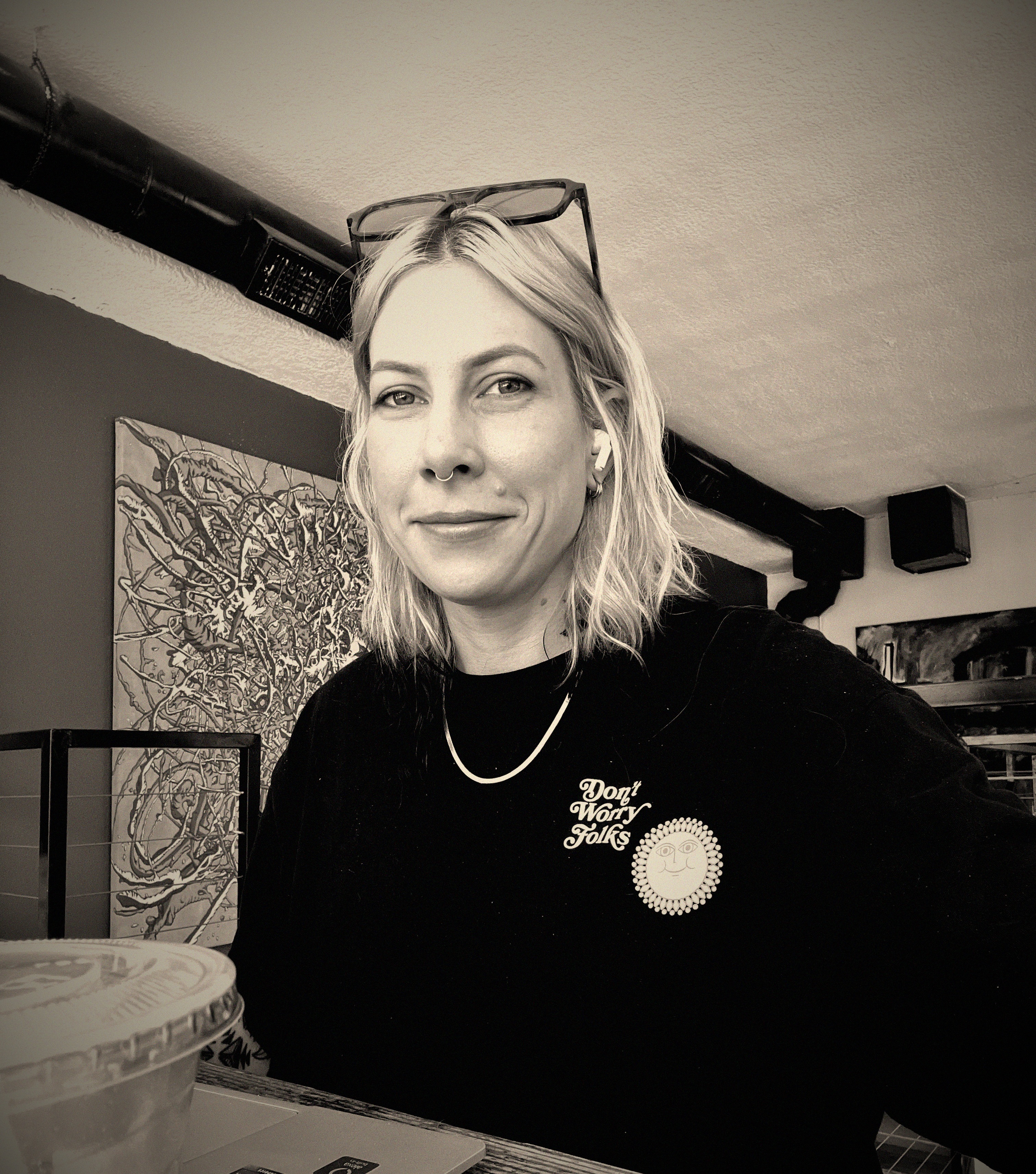
Lana spent more than a decade doing what she loved: making people feel seen, building relationships one appointment at a time, running a chair that became a career. She was good at the craft. What she wasn't good at — what nobody had given her the tools to be good at — was the business of it.
The messages scattered across four platforms. The client who confirmed on Instagram but whose name she couldn't match to a face. The month where she made more than she ever had and somehow still felt broke. The hours spent on admin work that had nothing to do with hair. None of that was unique to her. It was the industry.
"Protect the artists."
Lana · Founder of ChairSpace
When she became a salon owner, she saw it from the other side. She started as the only stylist in the building and built a team that grew to fourteen stylists and barbers, never falling below six once the culture took hold. She created an environment where people stayed not because they had to but because they wanted to.
She also brought something most founders don't: a background in healthcare technology operations. Workforce management. System infrastructure. The kind of operational thinking that turns a good idea into something that actually works at scale. She could see what the industry needed and she knew how to build it.
So she built the spec herself. 54 pages. 21 tables. Every feature documented, every workflow mapped, every edge case considered. Not because she had to prove something — but because she'd spent 16 years living the problem and knew exactly what the solution looked like.
"It's a brilliant concept. It doesn't exist yet. And it's going to make money."
Lana · Founder of ChairSpace